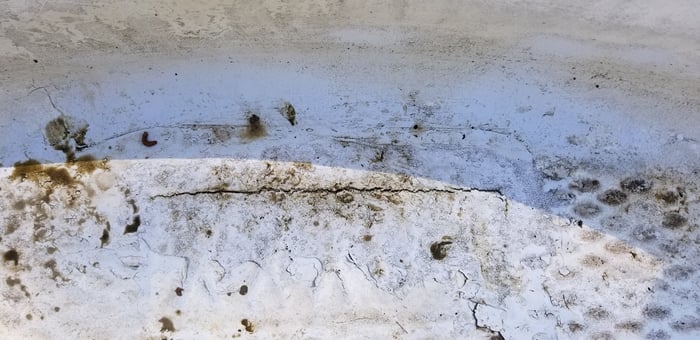
If your pool is loosing water and you have checked and eliminated all four possible causes in our previous article, the leak could be in the PVC plumbing.
1. Construct a pressure testing tool as shown in the diagram and connect it to the pool PVC lines.
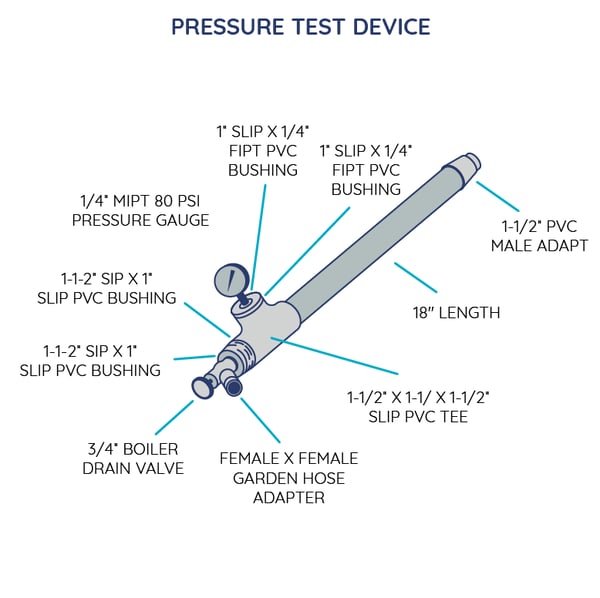
2. Test either the entire system at once or each PVC line separately. Install a pressure test plug in each return, skimmer and main drain.
3. Use the attached pressure test tool to put water in the PVC lines. The lines should be mostly full of water and not just air. Remove one of the plugs if necessary to fill the pipes with water then reinstall the plug. Continue to add water until the pressure reaches 20-25 psi.
4. Turn off the valve on the pressure test tool and watch the pressure gauge. If the pressure goes down quickly, there is a leak in the PVC pipe. Be sure and check the pressure test plugs to make sure they are not leaking. If the pressure goes down slowly there is a small leak. If there is no leak the pressure should hold for several hours.
5. If the pressure goes down you will need to test each line individually to locate the leak. If the PVC pipe is under a concrete deck, you can add an air valve to the pressure test tool. Use an air tank or compressor to add air to the water pressurized line. Look for the water bubbling in cracks or use a stethoscope to listen through the deck for the leak.
We hope that helps! If you are still experiencing issues, let us know the comments.
Here are some additional resources you may find useful.